
For many existing commercial buildings, ventilation strategies were designed around a simple principle: bring in more outdoor air to dilute CO2 and indoor contaminants. While this approach can satisfy ventilation requirements, it also comes with an energy penalty. Every additional cubic foot of outdoor air must be heated, cooled, or dehumidified before it enters the occupied space.
As existing HVAC systems approach replacement, building owners and engineers are increasingly looking at whether the original ventilation strategy still makes sense. ASHRAE Standard 62.1‘s Indoor Air Quality Procedure (IAQP) provides a performance-based alternative that can reduce outdoor air requirements while maintaining verified contaminant control. For existing buildings, this can create an opportunity to rethink not only ventilation, but the number, size, and operation of HVAC systems serving the building.
The HVAC Replacement Opportunity
One of the most significant opportunities for buildings converting to IAQP occurs when commercial HVAC equipment is nearing the end of its useful life.
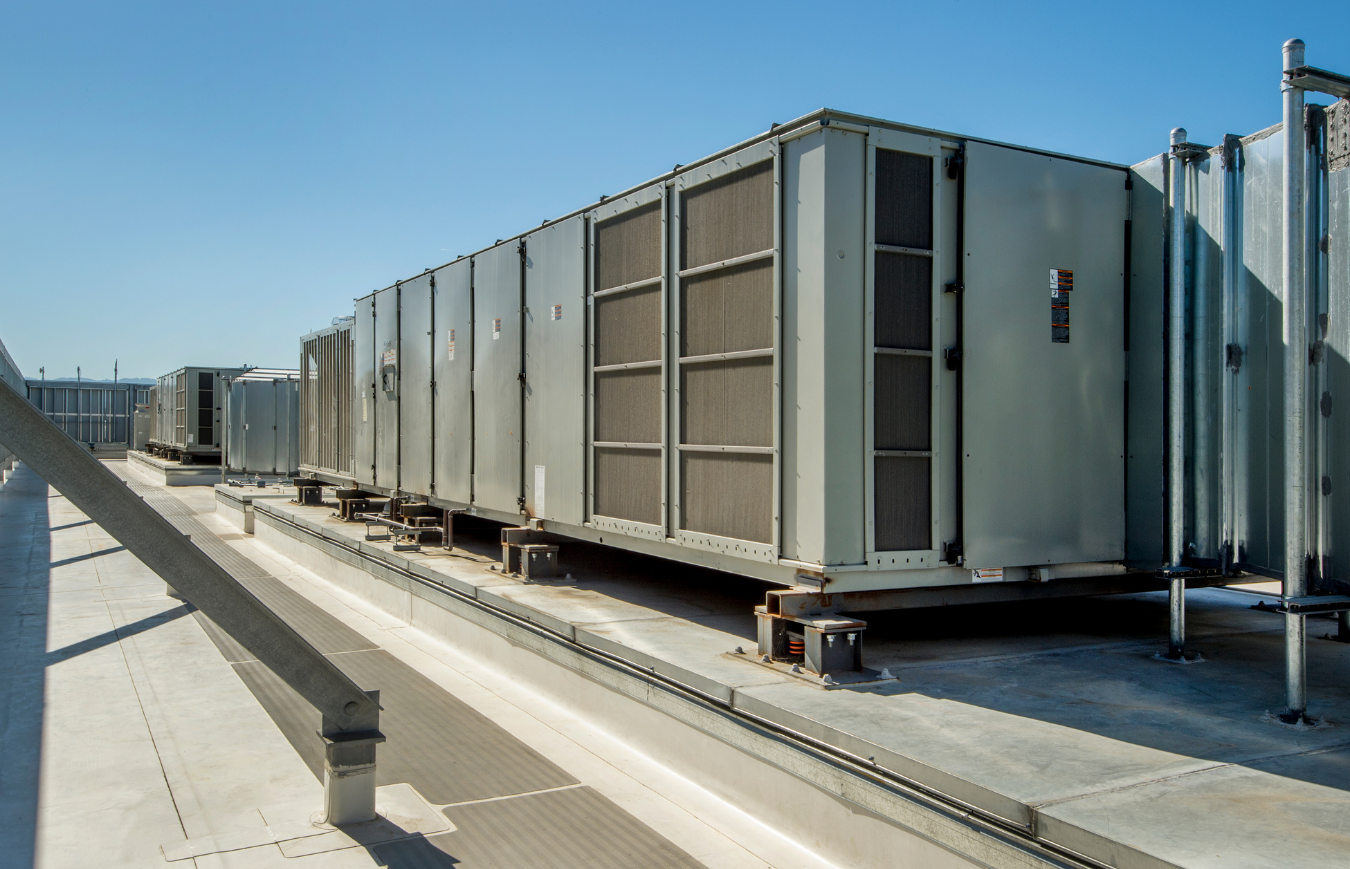
A conventional replacement often means replacing existing equipment with similar equipment: the same number of rooftop units, similar capacities, and a ventilation strategy based on the building’s existing outdoor air requirements. But if the building’s ventilation load can be reduced through IAQP, the HVAC system itself may no longer need to be configured the same way.
Lower outdoor air requirements can reduce the amount of heating and cooling capacity dedicated to conditioning ventilation air. This can allow engineers to specify lower HVAC tonnage and, depending on the building and system configuration, consolidate multiple HVAC units into fewer operating systems.
Instead of treating HVAC replacement as a one-for-one equipment swap, IAQP creates an opportunity to reconsider the overall system design.
From Multiple HVAC Units to a More Efficient System
Many existing commercial buildings have accumulated HVAC equipment over decades. Individual rooftop units may serve different areas of a building even when those spaces have similar operating schedules, occupancy characteristics, and ventilation needs.
When these systems reach end-of-life, replacing every unit individually can perpetuate an inefficient configuration.
IAQP can provide another path.
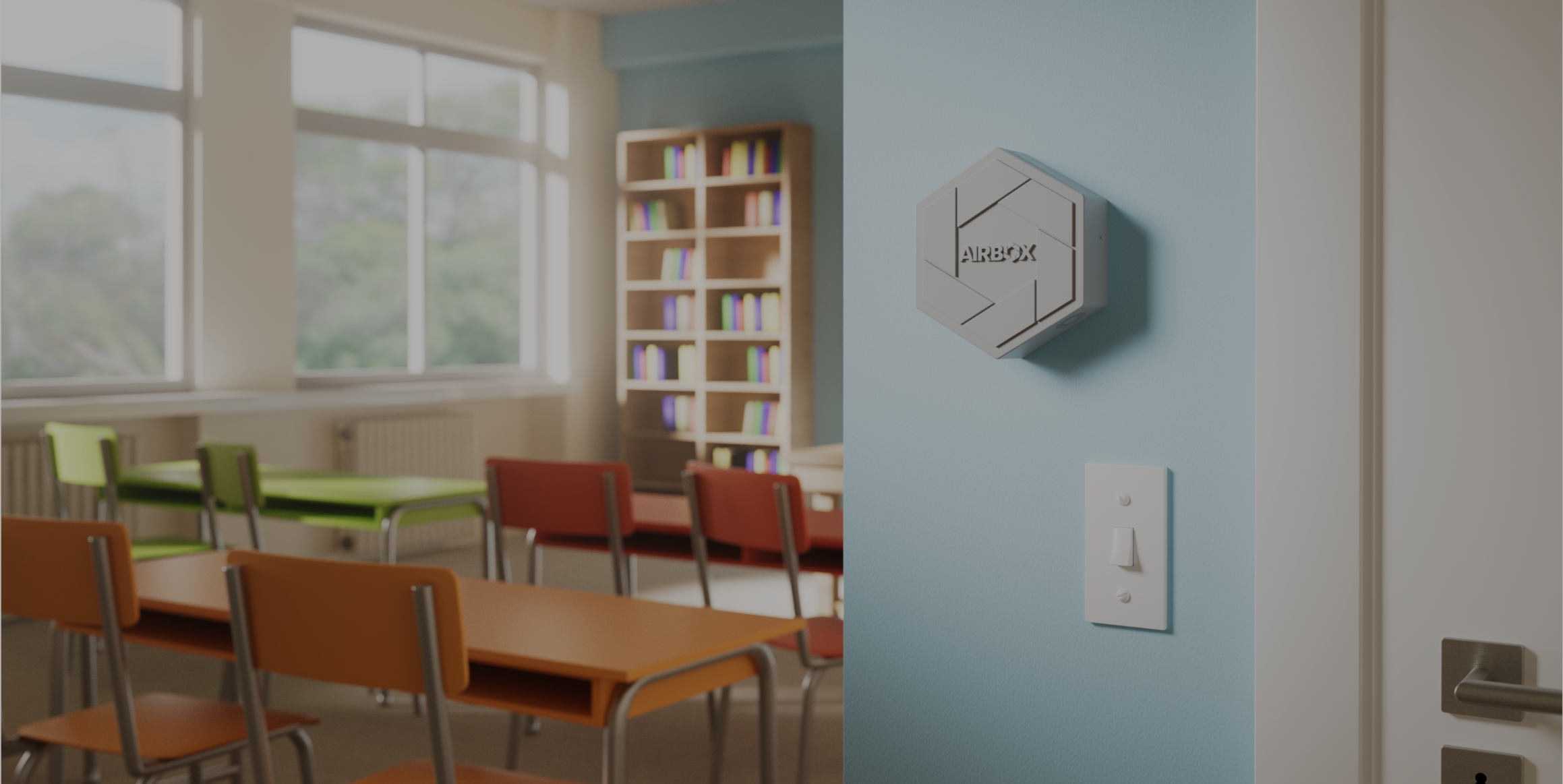
By reducing the outdoor air required for dilution and supplementing contaminant control with high-performance air purification, multiple zones may be able to operate with a smaller number of appropriately sized HVAC systems. High Volume Purifiers (HVPs) can provide additional treated airflow and contaminant reduction without requiring the HVAC system to condition the same volume of outdoor air.
This can make HVAC consolidation possible in applications where the existing system configuration is driven in large part by ventilation requirements.
The result is not simply fewer pieces of equipment. A consolidated system can mean:
- Fewer HVAC units to operate and maintain
- Lower required HVAC tonnage
- Reduced outdoor air conditioning loads
- Simplified system design
- Reduced equipment and installation costs
- More available mechanical space
- Potentially lower long-term utility and maintenance costs
IAQP Can Extend the Value of Existing Equipment
IAQP isn’t only a strategy for buildings replacing their HVAC systems.
In some existing building conversions, outdoor air can be reduced while the major HVAC equipment remains in place. This allows building owners to reduce the energy required to condition ventilation air while extending the useful life of existing equipment.
That creates two distinct pathways:
Existing equipment still has useful life:
Reduce ventilation loads and improve contaminant control without undertaking a major HVAC replacement.
Equipment is approaching replacement:
Use the reduced ventilation load to reevaluate HVAC sizing, system configuration, and the potential for equipment consolidation.
The second scenario can be particularly compelling because it allows IAQP to influence the design before the next generation of HVAC equipment is purchased.
Reducing Outdoor Air Can Reduce Energy Consumption
The energy impact of ventilation is often overlooked because outdoor air is treated as a requirement rather than an energy load.
But outdoor air comes with a conditioning cost. In a hot climate, that air may need to be cooled and dehumidified. In a cold climate, it may require substantial heating. The greater the outdoor airflow, the greater the amount of energy required to condition it.
IAQP changes the design approach by addressing contaminants directly rather than relying exclusively on outdoor air dilution.
When the IAQP design demonstrates that contaminant concentrations can be maintained within applicable limits, the required outdoor airflow can potentially be reduced. For existing buildings, this can reduce operating costs without necessarily requiring major HVAC equipment replacement.
This is particularly valuable during HVAC replacement because the building owner can potentially capture both operational savings and equipment savings at the same time.
IAQP Is More Than an Energy Strategy
Reducing outdoor air does not mean reducing the level of contaminant control.
The fundamental difference with IAQP is that the ventilation strategy is based on performance and contaminant control, rather than relying solely on dilution with outdoor air. The ASHRAE IAQP Calculator supports this process by accounting for typical contaminants, their potential effects, and the building’s contaminant generation rates as part of the ventilation design. The design must then establish an appropriate approach for controlling those contaminants and maintaining concentrations within the applicable limits.
Verification testing is an important part of this process. ASHRAE-compliant verification testing can be used to demonstrate that the implemented system is achieving the required contaminant control in the occupied environment.
This performance-based approach allows the building to pursue energy savings while maintaining a measurable basis for ventilation and contaminant control.
What Makes an Existing Building a Good IAQP Candidate?
The opportunity often begins with a building problem, not with someone specifically asking for IAQP.
Several conditions can indicate that a building should be evaluated for a performance-based ventilation strategy:
- HVAC equipment is nearing end-of-life or scheduled for replacement
- Outdoor air conditioning costs are high
- Large outdoor air volumes make temperature or humidity difficult to maintain
- The building owner has energy reduction or decarbonization goals
- Building occupancy or operations have changed
- Ventilation requirements are creating equipment or capacity challenges
- Wildfire smoke or poor outdoor conditions are affecting building operation
- Existing contaminant-control equipment is not delivering measurable performance
These conditions can turn a routine HVAC replacement or building improvement project into an opportunity to evaluate the entire ventilation strategy.
A Different Approach to Ventilation
For existing commercial buildings, IAQP shouldn’t be viewed simply as a method for reducing outdoor air. It can be a way to rethink how the building’s ventilation systems work together.
Instead of automatically replacing five aging rooftop units with five new rooftop units, for example, the design team can evaluate whether the building’s actual ventilation and contaminant-control requirements support a different configuration. In the right application, consolidating HVAC equipment and supplementing the system with air purification technology can reduce equipment requirements while maintaining the performance needed for the occupied spaces.
This approach can create savings at multiple points in the building lifecycle, from initial equipment and installation costs to ongoing energy consumption and maintenance.
The Bottom Line
Existing commercial buildings are converting to IAQP because they have an opportunity to get more from their next HVAC investment.
Performance-based ventilation can reduce outdoor air requirements, lower the energy required to condition that air, decrease HVAC tonnage, and create opportunities to consolidate equipment. At the same time, IAQP provides a framework for directly addressing contaminants and verifying system performance.
For building owners facing an upcoming HVAC replacement, the question isn’t only “What equipment should replace what we have?” It may be:
“Does the building still need to be ventilated the way it was originally designed?”
IAQP provides a way to answer that question based on the building’s actual contaminant loads, ventilation requirements, and performance objectives.
Talk to an expert to see if IAQP is the right design for your building.