As building codes evolve and indoor air quality (IAQ) becomes a top priority, many design teams are rethinking their approach to energy-efficient ventilation. For years, Demand Control Ventilation (DCV) has been the standard method for reducing energy consumption in commercial facilities by adjusting ventilation rates based on occupancy levels. However, an increasing number of engineers and owners are looking to the Indoor Air Quality Procedure (IAQP), a performance-based alternative that ASHRAE Standard 62.1-2022 defines and outlines as a smarter, more flexible solution. The reason? IAQP doesn’t just save energy; it can significantly reduce HVAC system design size, improve indoor air quality, and simplify long-term operation and maintenance.
Limitations of Demand Control Ventilation
While DCV can reduce outdoor air intake during periods of low occupancy with CO₂ monitoring, it presents several engineering and operational drawbacks:
- No reduction in equipment sizing: Despite reduced outdoor airflows during operation, engineers must still size systems according to the Ventilation Rate Procedure (VRP) for full design occupancy. This results in no capital cost savings on air handling units (AHUs), ductwork, cooling capacity, etc.
- Sensor reliability challenges: DCV depends on CO₂ sensors that are prone to drift, require frequent calibration, and can be difficult to manage across distributed systems. Inaccurate readings can lead to over-ventilation (wasting energy) or under-ventilation (risking occupant health).
- Increased compliance burden: ASHRAE has introduced stricter sensor calibration and accuracy requirements in recent revisions to Standard 62.1, increasing both the initial and ongoing cost and complexity for facility managers and OEMs.
- Limited pollutant control: DCV is occupancy-based and does not address airborne contaminants such as VOCs, PM2.5, ozone, or formaldehyde—many of which are known carcinogens or respiratory hazards. A space can meet CO₂ targets while still failing to ensure healthy indoor air.
IAQP: A Smarter Performance-Based Alternative
Unlike DCV, IAQP is a performance-based design method that enables reduced outdoor air rates if contaminant levels can be controlled using validated technologies such as high-efficiency filtration and air cleaning systems. This approach allows engineers to balance energy efficiency with real indoor air quality improvements. Key advantages include:
- Smaller HVAC systems and reduced first costs: By designing for lower ventilation rates, IAQP often requires smaller AHUs, DOAS, reduced duct runs, fewer or smaller ERVs, and more, significantly cutting first costs on new construction and depending on the air cleaning equipment, often times seeing net savings on new construction.
- Targeted removal of harmful pollutants: IAQP outlines harmful pollutants in ASHRAE Table 6-5, many of which are carcinogens or linked to chronic disease. By actively mitigating these contaminants with proven removal efficiency tested air cleaners, building owners gain increased occupant health and safety and a defensible strategy to reduce liability related to indoor air complaints, wellness claims, or future regulatory action.
- Verified performance through testing: Technicians measure and verify indoor air quality through contaminant testing, using real performance data rather than assumptions based on occupancy alone. Post-implementation Verification Testing takes out the guesswork of IAQP equipment performance.
AirBox + IAQP: Integrated Solutions for Compliance and Performance
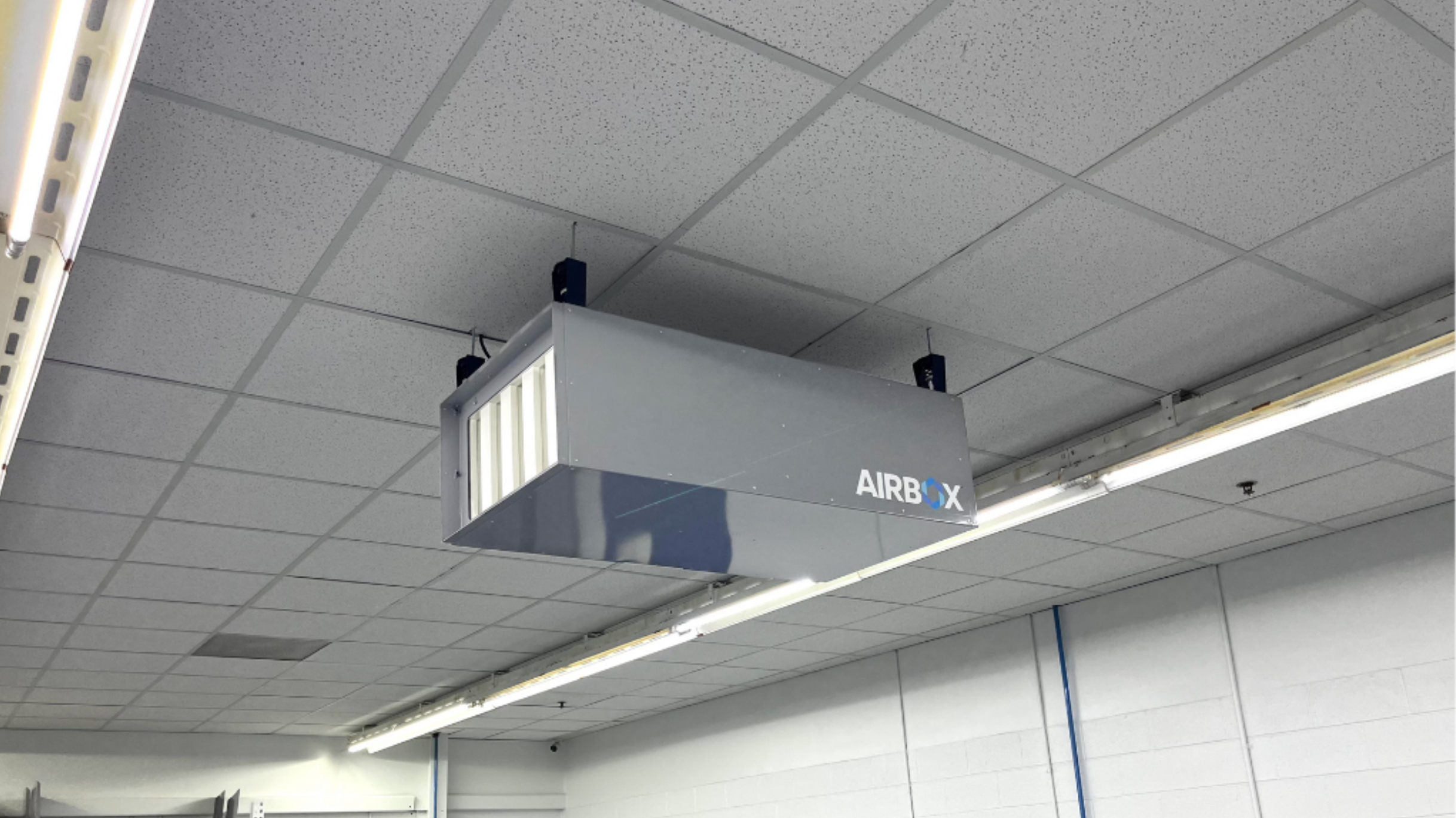
AirBox delivers a turnkey solution for implementing IAQP effectively by combining engineering and design support, compliant air purification systems, comprehensive IAQ Verification Testing, compliance documents, and advanced system control with the AirBox Advanced Operating System (AOS). Our air cleaners are equipped with Certified HEPA filtration and Advanced Molecular Adsorbent media, targeting the full range of contaminants listed in ASHRAE Table 6-5 such as particulate matter and harmful gases like formaldehyde, ozone, and VOCs. This comprehensive filtration not only supports IAQP compliance but also qualifies for dual credit under ASHRAE Standard 241, helping facilities meet both indoor air quality and infection control goals.
We manufactured AirBox systems in our EPA-registered facility in the USA. Our units range from 500 to 9,000 CFM and integrate seamlessly into both new construction and retrofit projects. By combining IAQP with proven solutions like AirBox, owners and engineers can:
- Realize CAPEX savings by downsizing HVAC equipment
- Achieve measurable energy savings for ongoing cost reduction
- Comply with evolving codes and regulations to stay ahead of industry standards
- Ensure verified, high-quality indoor air that prioritizes occupant health
- Access dual-credit pathways under ASHRAE Standard 241, supporting both infection control and IAQ objectives
As expectations around indoor air quality rise, IAQP offers a future-forward path that aligns performance, compliance, and occupant health. With the right strategy and solutions, achieving better air doesn’t have to come at the cost of efficiency.