
In athletics, nothing matters more than performance. Athletes, coaches, and athletic directors go to sometimes extreme lengths in pursuit of even the smallest performance gains, and organizations spare practically no expense on medical and therapy solutions to speed recovery.
But there’s one element most athletic departments overlook in these quests: indoor air quality.
The indoor air your athletes breathe every time they work out, practice, or perform in your athletic facilities could be holding them back.
Today we want to show you the hidden dangers of unsafe air, including the specific ways poor indoor air quality (IAQ) could be harming your athletes’ performance or hindering their recovery.
It’s our goal to help you help your student athletes and the athletic programs they’re a part of. Here’s the case for why IAQ matters for your student athletes, plus why now is the right time to act and how AirBox can mitigate your IAQ issues.
Understanding the Threats to Cleaner Air
Within any indoor space, a range of pollutants and particulates may collect in the air, especially in spaces with poor or no ventilation. Here’s a quick rundown:
- Particulate matter: A blanket category including dander, dust, mold particles, and anything else that can remain suspended in the air
- Carbon monoxide: A potentially deadly gas, usually a byproduct of fuel-burning sources
- Infectious aerosols: Airborne pathogens that cause disease including influenza, COVID-19, common cold, fungal, staph, and more
- Volatile organic compounds (VOCs): A range of gaseous organic pollutants such as benzene, formaldehyde, and methylene chloride; commonly used in fragrances and cleaning products
Why does this matter? Because these pollutants can build up in indoor air (usually two to five times as high as outdoor air, per EPA studies) and can lead to a variety of problems. And high-performing athletes experience a clear negative impact on performance.
Why IAQ Matters for Athletes
There’s been plenty of research into the effects polluted air can have on athletes and other active individuals, and the results may surprise you.
Lowered cardiovascular performance
First, poor IAQ lowers cardiovascular performance, dampening overall physical performance and recovery. One study published in the International Journal of Preventive Medicine found that high levels of air pollution caused “a significant reduction in the performance at submaximal levels of physical exertion.” The study found a “significant decrease in mean VO2 max [how much oxygen the body can supply during exertion], red blood cell count, hemoglobin, hematocrit, and mean corpuscular volume” among the study participants who endured polluted air compared to those who didn’t.
Another study looked at performance within outdoor air pollution in heavily polluted areas in China, finding that pollution conditions like those of the 2014 Beijing Marathon added five minutes to the top-ten finishers’ times compared to healthy air quality, bumping up to 12 minutes for the average marathon runner (still a relatively fit profile). That’s a significant performance drop and when we consider that IAQ tends to be exponentially worse than outdoors, the implications on performance in poor IAQ are significant.
Our AirBox scientists take these studies seriously and they are continually improving our product lines to produce the safest air by means of the most powerful technology.
Impaired cognitive performance
High-level cardiovascular performance isn’t the only way poor IAQ threatens student athletes. It also harms cognitive performance.
The EPA points to poor IAQ as a partial or primary cause for all sorts of cognitive performance-inhibiting symptoms, including:
- Headache
- Nausea
- Fatigue
- Chemical sensitivities
A Harvard study gives us verifiable numerical proof, too. It found that response times and throughput both slowed by 1 to 1.5 percent each time PM2.5 (particulate matter 2.5 microns or smaller) increased by 10 micrograms per cubic meter. CO2 concentrations had an even more drastic effect: every increase by 500ppm saw around 1.5 percent slower response times and around 2.2 percent lower throughput.
Cognitive effects like these are harmful to student-athletes, both in their athletic pursuits (learning a new play or scheme or even reacting during play) and in their academic ones.
Now Is the Time to Act on Athletic IAQ
We’ve made a pretty clear case that indoor air quality has a significant effect on athletic performance and recovery. Now is the time to act; this is an ideal moment for athletic directors and other decision-makers to push for action on IAQ in athletic facilities.
The COVID-19 pandemic saw many colleges and universities install mitigation technologies including air purifiers throughout classrooms and common spaces. The posture was one of crisis response, a reactive rather than proactive moment. The continuation of academic programs was a mission-critical goal, and so athletic facilities like gyms, locker rooms, and meeting rooms didn’t always get the same level of attention as the core academic areas.
With new standards, code updates, and performance-based ventilation pathways now available, some facilities have a practical, proactive way to upgrade indoor air quality, support athlete wellness, and see savings all at the same time. ASHRAE’s IAQP allows facilities to reduce outdoor air intake by recirculating cleaned air. The result? Immense energy savings and healthier environments for a boost in athletic performance and recovery.
AirBox: Your Proven Solution for Athletic Facility Air Purifiers
If you know you can improve athletic performance and recovery with cleaner air, why not take action now? We’ve shown you why taking action on IAQ is essential and why now is the time to do it. Now let’s talk about how.
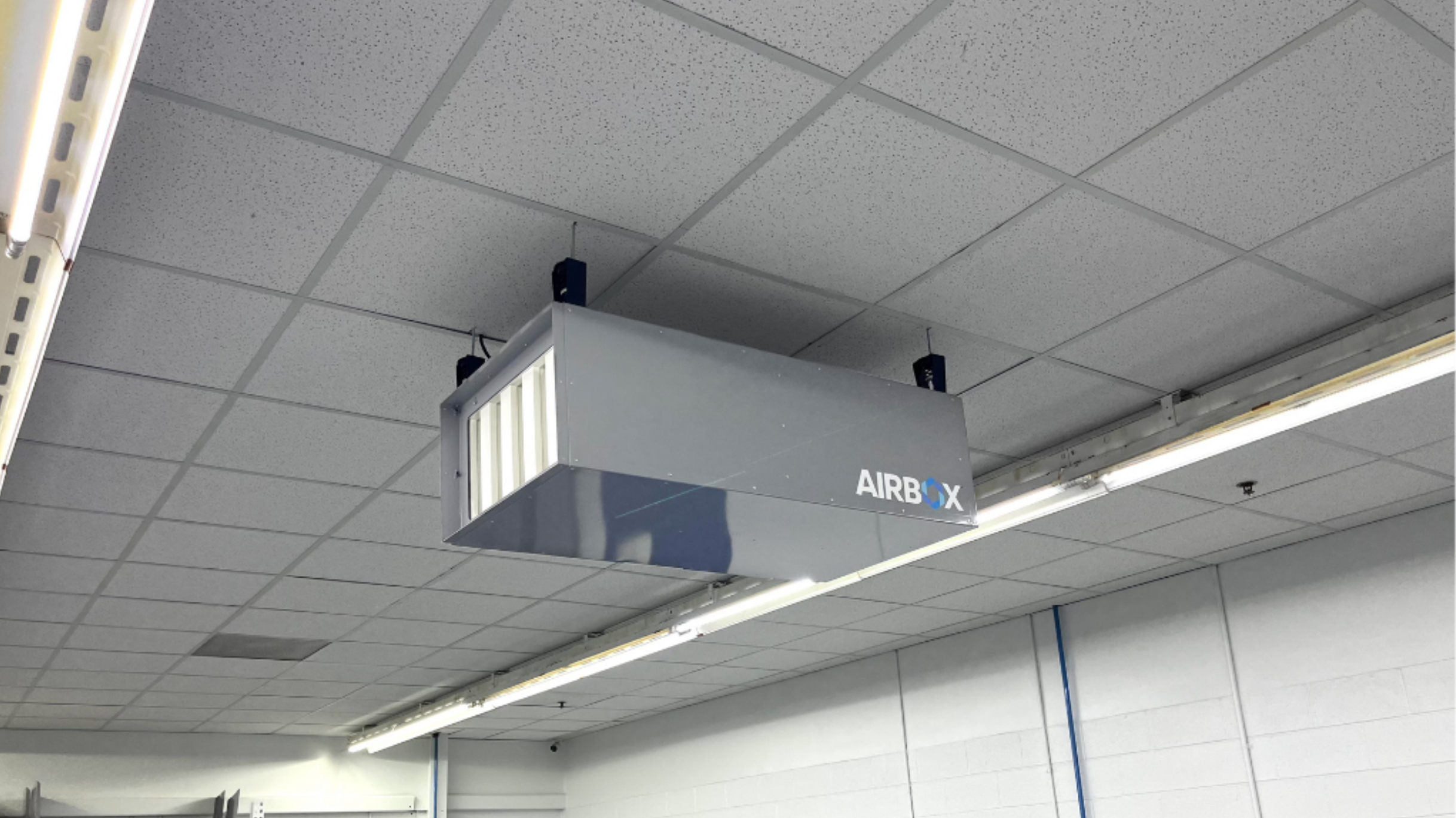
AirBox offers a full lineup of powerful high-flow commercial air purifiers, including some that are perfect for larger athletic spaces like gyms and others suited to small-to-midsized spaces like locker rooms. AirBox takes a science-backed approach to cleaning the air, one that matches the best practices and recommendations of the CDC, EPA, and more. We combine Certified HEPA filtration technology that is proven to remove 99.99% of airborne particulates, including those that affect athletic performance, and Advanced Molecular Adsorbent media to reduce gaseous contaminants like volatile organic compounds (VOCs).
Our units can even support compliance with IAQP for energy savings with cleaner air, as well as provide Infection Risk Management Mode (IRMM) in compliance with ASHRAE Standard 241 to activate quick mitigation during times of increased infectious aerosol risk.
AirBox products are already being used in educational facilities (including in athletics) across the country, and we’re ready to serve you, too!